

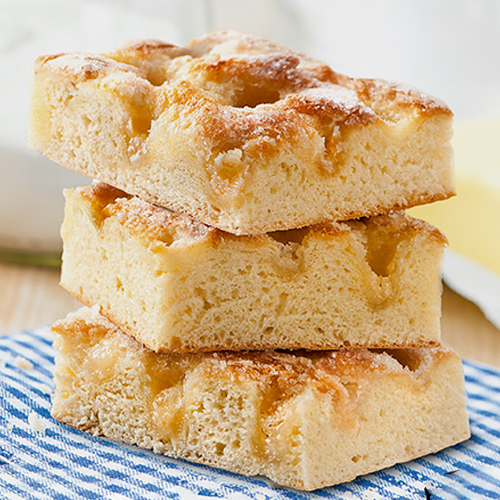
Bremer Butterkuchen is a classic German butter cake from Bremen, made with soft yeast dough, plenty of butter, sugar, and sliced almonds. Also known as Zuckerkuchen, or sugar cake, this simple sheet cake has a tender crumb, buttery dimples, and a golden almond-sugar topping.
In northern Germany, Butterkuchen is often served for Kaffee und Kuchen, family gatherings, church events, weddings, and even funeral receptions. It is humble, comforting, and exactly the kind of cake that proves German baking does not need frosting to feel generous.
What Is Bremer Butterkuchen?
Bremer Butterkuchen is a German butter cake associated with Bremen and northern Germany. It is made from a yeast dough that is rolled into a sheet pan, dimpled with the fingertips, filled with butter, and topped with sugar and sliced almonds before baking.
The cake is sometimes called Zuckerkuchen, meaning sugar cake. Unlike frosted American-style sheet cakes, Butterkuchen gets its richness from butter melting into the dough and its sweetness from a crunchy sugar-almond topping.
Butterkuchen vs. Zuckerkuchen
Butterkuchen means butter cake, while Zuckerkuchen means sugar cake. The names often refer to similar German sheet cakes made with yeast dough, butter, sugar, and sometimes almonds. In Bremen and parts of northern Germany, the name Zuckerkuchen is commonly used for this style of cake, especially when served at traditional gatherings.
Bremer Butterkuchen
Ingredients
- 14 ounces all-purpose flour
- 1/2 teaspoon salt
- 1 ounce fresh yeast`
- 1/2 cup lukewarm milk
- 6 tbsp. butter ideally unsalted
- 2 eggs
- 1-1/2 ounces sugar
For the topping:
- 10 tbsp butter ideally unsalted
- 1/4 teaspoon salt
- 6 ounces sliced blanched almonds
- 6 ounces sugar
Instructions
- Sieve the flour into a large bowl. In a separate bowl, mix together half of the lukewarm milk, 1 teaspoon of sugar and the crumbled fresh yeast. Cover and keep in a warm place for about 10-12 minutes to prove.
- Melt 6 tbsp. butter gently and allow to cool. Add the melted butter, salt, eggs, rest of the sugar, milk and yeast-milk mixture to the flour and work into a smooth dough in a food processor with a dough blade or the kneading attachment of an electric mixture. Cover and allow to rise for about 20 minutes.
- Grease a 17 1/2 x 14 inch baking sheet. Roll the dough out on a slightly floured surface to a size that fits the pan. Spread the rolled out dough on to the baking sheet and push the edges up at the sides. Use your fingertips to make small dimples in the dough, cover and allow to stand for another 30 minutes.
- Preheat the oven to 350 degrees F.
- Beat together the remaining 10 tbsp. butter and salt and pipe or spoon the butter into the dimples. Sprinkle the sugar and almonds over the cake.
- Bake the Butterkuchen on the middle shelf for about 20 minutes or until a toothpick comes out clean and the cake is golden on top.
Notes
Tips for Making German Butter Cake
- Use lukewarm milk, not hot milk, so the yeast activates properly.
- Let melted butter cool slightly before adding it to the dough.
- The dough should be soft and smooth, not stiff.
- Do not skip the dimples. They hold the butter and give Butterkuchen its classic texture.
- Let the dough rise in a warm, draft-free place.
- Bake until golden, but do not overbake or the cake may become dry.
What to Serve with Bremer Butterkuchen
Serve Bremer Butterkuchen with:- Coffee
- Black tea
- Hot chocolate
- Warm milk
- Fresh berries
- Whipped cream
- Vanilla sauce
- German fruit preserves
- A Kaffee und Kuchen spread
How to Store Butterkuchen
Store leftover Butterkuchen covered at room temperature for up to 2 days. For longer storage, refrigerate it for up to 4 days, though the texture is best the day it is baked.How to Reheat Butterkuchen
Warm slices gently in a 300°F oven for 5 to 8 minutes. This helps refresh the cake and soften the butter-rich topping.Can You Make Butterkuchen Ahead of Time?
Yes. Butterkuchen is best fresh, but you can bake it earlier in the day and serve it at room temperature. You can also prepare the dough through the first rise, press it into the pan, cover it, and refrigerate it overnight. Let it come to room temperature and rise before adding the topping and baking.Can You Freeze Butterkuchen?
Yes. Freeze slices in an airtight container for up to 2 months. Thaw at room temperature and reheat gently in the oven before serving.Easy Substitutions
- No fresh yeast? Use active dry yeast or instant yeast. One ounce fresh yeast is roughly equivalent to about 2 1/4 teaspoons active dry yeast, but check your yeast package for conversion guidance.
- No sliced blanched almonds? Use regular sliced almonds or leave the almonds off for a simpler Zuckerkuchen.
- Want more flavor? Add a little vanilla sugar, lemon zest, or almond extract to the dough.
- Want a richer topping? Add a splash of cream over the cake before baking, a common variation in some German butter cakes.
- No stand mixer? Knead the dough by hand until smooth and elastic.
FAQ Section
What is Bremer Butterkuchen?
Bremer Butterkuchen is a German butter cake from Bremen made with yeast dough, butter, sugar, and sliced almonds. It is baked as a sheet cake and often served for coffee, gatherings, weddings, and funeral receptions.
Is Butterkuchen the same as Zuckerkuchen?
They are closely related. Butterkuchen means butter cake, while Zuckerkuchen means sugar cake. Both names can describe German yeast sheet cakes topped with butter and sugar, often with almonds.
Is German Butterkuchen a coffee cake?
Yes. Butterkuchen works beautifully as a German-style coffee cake and is often served for Kaffee und Kuchen with coffee or tea.
Can I use dry yeast instead of fresh yeast?
Yes. You can substitute active dry yeast or instant yeast for fresh yeast. Follow the conversion on your yeast package and proof active dry yeast in lukewarm milk before using.
Why do you make dimples in Butterkuchen?
The dimples hold the butter topping, allowing it to melt into the dough as the cake bakes. This creates the signature buttery texture.
How long does Butterkuchen stay fresh?
Butterkuchen tastes best the day it is baked, but it can be stored covered at room temperature for up to 2 days.
Can Butterkuchen be frozen?
Yes. Freeze cooled slices in an airtight container for up to 2 months. Thaw at room temperature and warm gently before serving.
What do you serve with Butterkuchen?
Serve it with coffee, tea, hot chocolate, whipped cream, vanilla sauce, berries, or German fruit preserves.
