

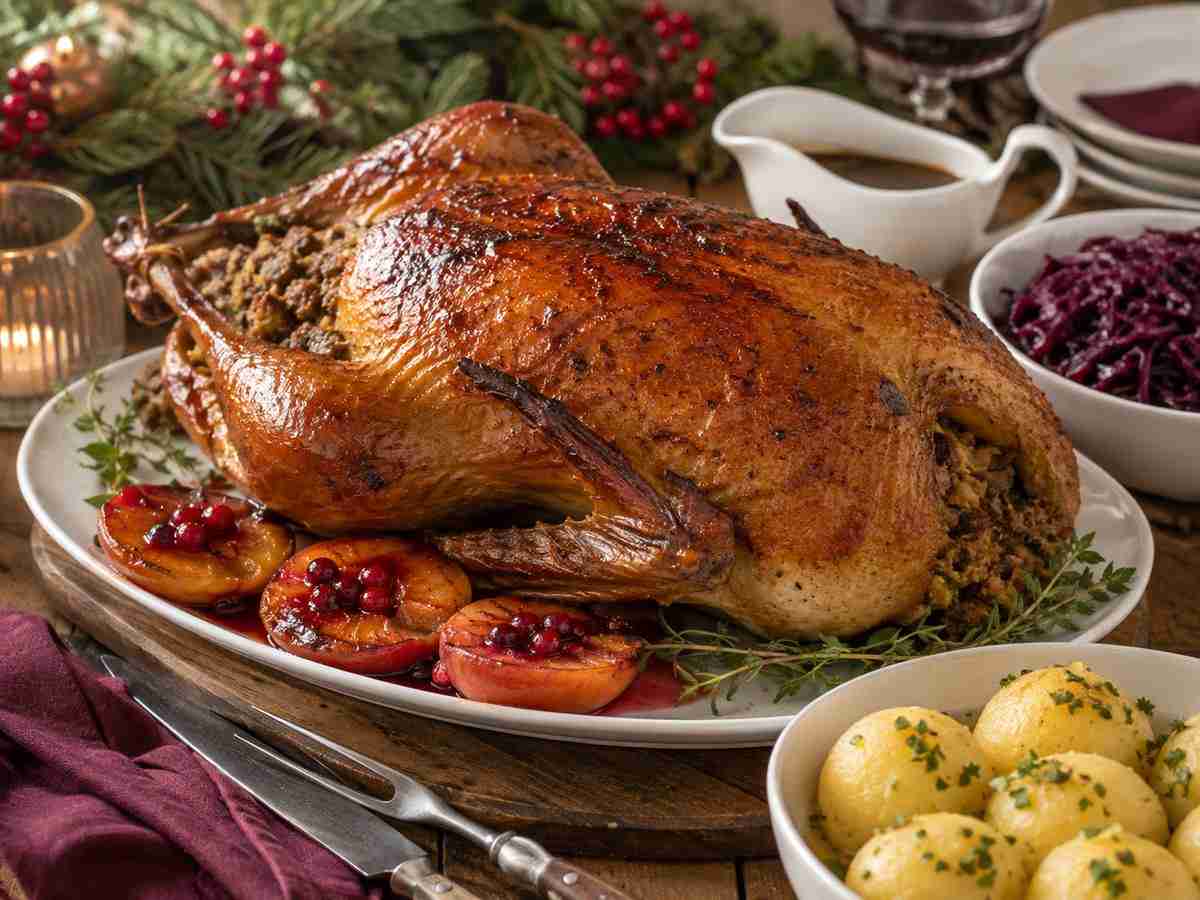
Roast Goose with Liver Pâté Stuffing and Red Currant Glazed Peaches is a festive German holiday dish made for Christmas, St. Martin’s Day, and special winter dinners. The goose roasts until the skin is crisp and golden, while the rich dark meat stays tender and flavorful.
The savory stuffing combines liver pâté, rye breadcrumbs, onion, paprika, sage, lemon zest, and egg for a hearty, old-world flavor that pairs beautifully with roast goose. On the side, halved peaches are baked with butter, brown sugar, cinnamon, and red currants for a sweet-tart accent that brightens the richness of the dish.
Serve this German roast goose with potato dumplings and red cabbage for a classic holiday meal. It is a showstopping centerpiece for anyone who wants to bring traditional German Christmas flavor to the table.
What Is German Roast Goose?
German roast goose is a traditional holiday entrée known for its crisp skin, rich flavor, and tender dark meat. It is often served during the colder months, especially for festive occasions such as St. Martin’s Day and Christmas.
Unlike leaner holiday birds, goose has a naturally rich layer of fat beneath the skin. As it roasts, that fat helps baste the meat and creates a beautifully crisp exterior when cooked properly. The result is deeply savory, moist, and satisfying.
This recipe pairs roast goose with liver pâté stuffing, red currant-glazed peaches, potato dumplings, and red cabbage. Together, these elements create a classic German-style holiday plate with richness, sweetness, acidity, and comfort in every serving.
Roast Goose with Liver Pâté Stuffing
The liver pâté stuffing gives this roast goose an especially savory and traditional flavor. Made with softened liver pâté, rye breadcrumbs, onion, paprika, sage, lemon zest, salt, pepper, and egg, the stuffing is rich without being overly heavy.
Rye breadcrumbs add a distinctly German bread flavor and help give the stuffing structure. The liver pâté brings depth and smoothness, while sage and paprika add warmth. A little lemon zest lifts the filling so it does not taste too dense.
In this recipe, the stuffing is shaped into balls and roasted alongside the goose near the end of cooking. This helps the stuffing become golden on the outside while staying tender inside. Serve the stuffing balls around the carved goose for a festive, generous presentation.
Red Currant Glazed Peaches
The red currant-glazed peaches add color, sweetness, and brightness to the holiday platter. Goose is rich, so a fruit element helps balance the meal and makes the dish feel more elegant.
The peaches are brushed with melted butter, filled with red currants and brown sugar, then lightly dusted with cinnamon before baking. As they roast, the fruit softens and the red currants create a tart, glossy filling.
A red currant glaze adds even more flavor to the finished dish. The sweet-tart fruit cuts through the richness of the goose and stuffing, giving each plate a beautiful contrast. The peaches also make the presentation feel festive enough for Christmas dinner or a special winter celebration.
Why Goose Is Traditional for German Holidays
Roast goose has long been associated with German winter celebrations. It is especially connected to St. Martin’s Day in November and Christmas meals later in the season.
Goose works so well as a holiday dish because it feels generous and celebratory. The meat is rich, flavorful, and ideal for serving with hearty sides like dumplings, red cabbage, stuffing, and gravy.
German holiday meals often balance rich meats with sweet, tart, or acidic accompaniments. That is why roast goose is commonly paired with red cabbage, fruit, wine-based sauces, or berry preserves. In this recipe, red currant-glazed peaches serve that same purpose beautifully.
Why You’ll Love This Recipe
This German roast goose recipe is festive, flavorful, and perfect for a special occasion. It has all the elements of a traditional holiday centerpiece: crisp roasted goose, savory stuffing, fruit glaze, classic sides, and a rich pan sauce.
You’ll love this recipe because it:
- Makes a beautiful German Christmas or St. Martin’s Day centerpiece
- Features crisp roasted goose with tender, flavorful meat
- Includes savory liver pâté and rye breadcrumb stuffing
- Adds a sweet-tart accent with red currant-glazed peaches
- Pairs naturally with potato dumplings and red cabbage
- Feels elegant, traditional, and celebratory
- Offers a memorable alternative to turkey or ham
- Creates a full holiday meal with classic German flavor

Roast Goose with Liver Pate Stuffing and Red Currant Glazed Peaches
Ingredients
- 7-8 lb whole oven ready goose
- 3 large just-ripe peaches halved and pitted
- 1-1/2 oz butter melted
- 2 tbsp light brown sugar
- a few pinches ground cinnamon
- 1 small box fresh red currants
- 1-2 tsp all-purpose flour
- 2-1/2 cups water
- 2 tbsp red currant jelly
- a little fresh lemon juice
- sea salt and freshly ground black pepper
For the stuffing:
- 1 small onion
- 1 tsp rapeseed or vegetable oil plus extra for brushing stuffing balls
- 1/2 tsp ground paprika
- 1/2 tsp dried sage
- grated zest of 1 small lemon
- 3-1/2 oz liver pate softened
- 5-1/2 oz fresh rye breadcrumbs
- 1/2 tsp sea salt
- 1 egg beaten
Instructions
- Heat the oven to 375 degrees F. Prick the skin of the goose in several places, especially around the leg and thigh. Rub the breast with salt. Place on a roasting rack set inside the baking dish.
- Roast for about 1 1/2 hours, lowering the temperature to 320 degrees F if the bird starts to over-brown.
- For the peaches, brush them with melted butter and place in another shallow roasting dish. Strip the red currants from the stalks and mix with the sugar. Spoon it into the peach cavities and dust with cinnamon. Bake them on the shelf above the goose at the start of the roasting for 15 to 20 minutes then remove and cool to room temperature.
- Meanwhile, make the stuffing. Sauté the onion in the oil for 5 minutes then stir in the paprika and cook for half a minute. Cool, then mix with the rest of the stuffing ingredients adding pepper to taste. Shape into 6 balls using wet hands if necessary.
- Lay them in a shallow ovenproof dish, brush with oil and bake for the last 30 minutes of roasting, near the top of the oven. As the goose cooks, you may want to pour off the fat as it drips off to cut down on it smoking. Make sure you have help to do this, as the bird will be heavy.
- When the goose has cooked, remove and let stand for 10 minutes before carving. Pour the fat off the pan and sprinkle in the flour. Stir well and cook for a minute, then pour in about 2 1/2 cups of stock or vegetable water. Stir well and boil, then add 2 tablespoons red currant jam, a squeeze of lemon juice and seasoning.
- Strain into a jug, then after the bird has been carved, pour the juices over. Arrange the stuffing balls and peaches around it.
- Serve with German potato dumplings (Kartoffelklöße) and red cabbage (Rotkohl).
- Guten Appetit!
Notes
Tips for the Best Roast Goose
Pat the goose dry before roasting. Dry skin browns and crisps more easily. Prick the skin carefully, especially around the fatty areas, but avoid piercing too deeply into the meat. Use a roasting rack so the rendered fat can drip away from the bird. This helps the goose roast more evenly. Pour off excess fat during cooking if needed. Goose releases a generous amount of fat, and removing some of it can help prevent smoking in the oven. Do not rush the roasting process. Goose benefits from steady cooking so the fat renders and the skin becomes crisp. Let the goose rest before carving. This helps the juices settle and makes the meat easier to slice. Save the rendered goose fat. It is excellent for roasting potatoes or vegetables.How to Serve German Roast Goose
German roast goose is best served as a generous holiday platter. Arrange the carved goose on a serving dish with the liver pâté stuffing balls and red currant-glazed peaches around the meat. Spoon a little sauce over the carved goose or serve the gravy separately in a warm pitcher. This lets guests add as much as they like. For a classic German holiday plate, serve the goose with potato dumplings and red cabbage. The dumplings soak up the sauce, while the red cabbage brings color, sweetness, and acidity. A full plate might include sliced goose, one stuffing ball, a glazed peach half, red cabbage, potato dumplings, and a spoonful of pan sauce.What to Serve with German Roast Goose
Roast goose is rich and flavorful, so it pairs best with sides that are hearty, tangy, fruity, or fresh. Good pairings include:- Potato dumplings
- Red cabbage
- Bread dumplings
- Parsley potatoes
- Roasted potatoes
- Braised apples
- Chestnuts
- Brussels sprouts
- Green salad with vinaigrette
- Cucumber salad
- Lingonberry preserves
- Red currant jelly
- Rye bread
- Riesling
- Spätburgunder
- Sparkling mineral water
